
Conscious Living Journey
From Autopilot Toward Flourishing
The Seed
A seed can remain dormant in the ground for a long time.
It may sit beneath the soil in darkness, enclosed by its outer coat. Inside, the embryo remains alive but inactive. Around it, stored food waits until the conditions support growth.
Then water begins to enter.
As the seed absorbs water, it swells. The outer coat softens and begins to split. What was sealed starts to open.
Activity increases within the seed. The embryo begins using its stored food for energy. It needs oxygen. Warmth helps activate what has been dormant. Depending on the kind of seed, light or darkness may also influence what happens next.
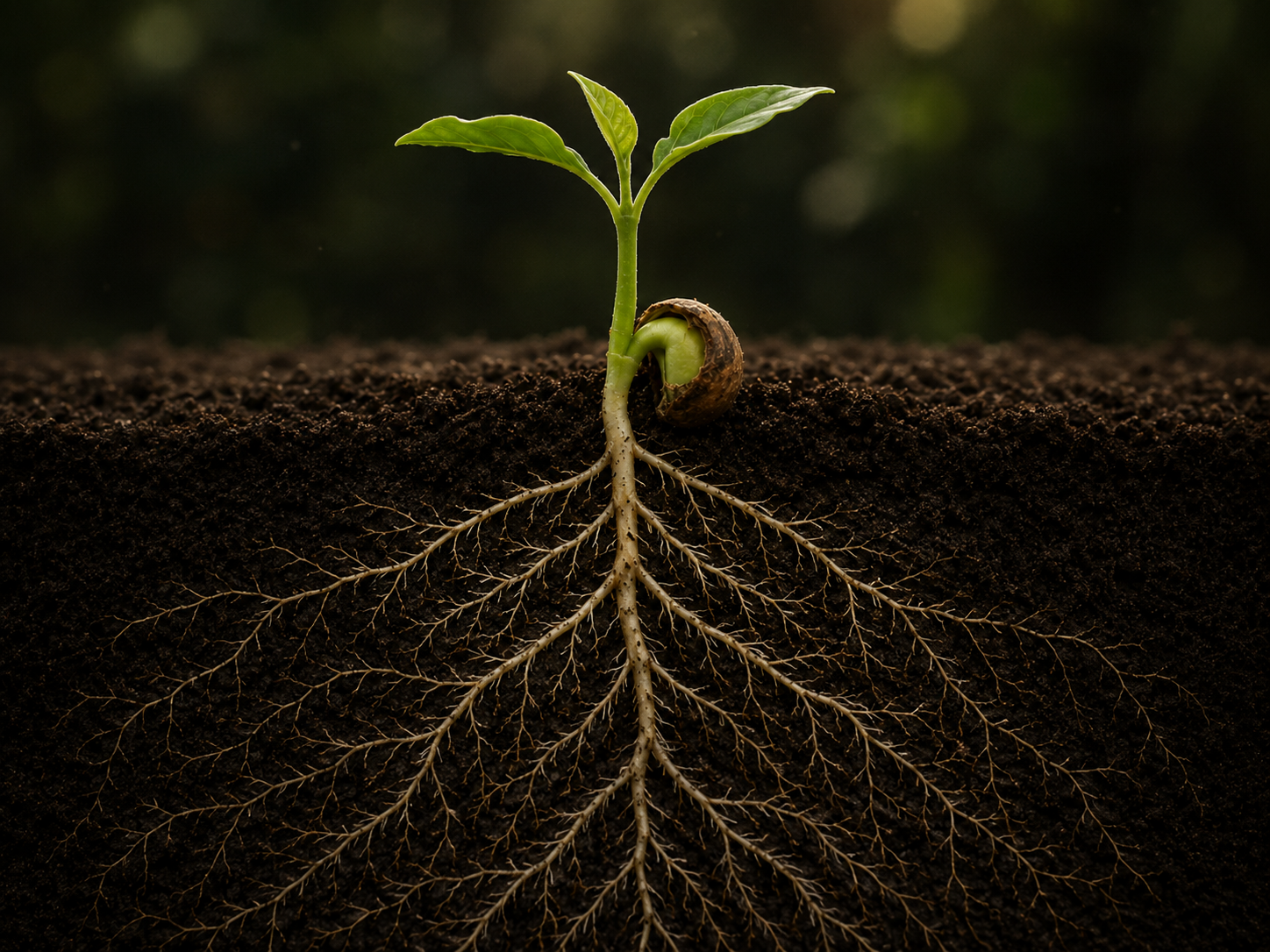
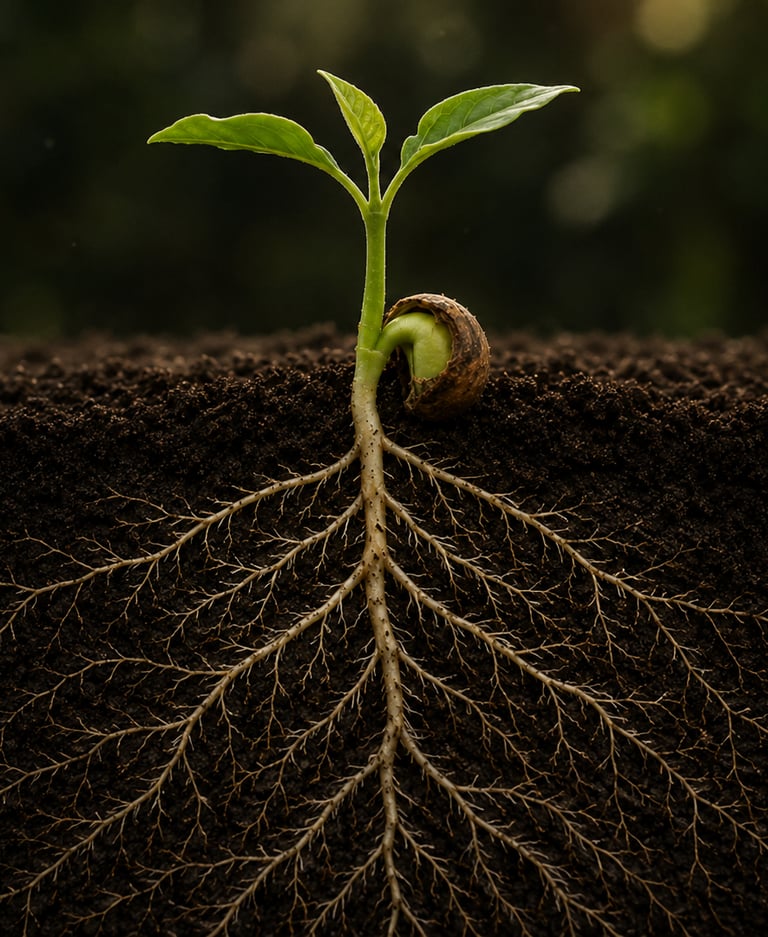
The first root pushes downward into the soil. It anchors the seedling and begins drawing in water and nutrients.
Then the shoot moves upward. It presses through the soil toward the surface. Once it emerges, it begins to open into the light.
A seed does not become a plant all at once.
It rests, absorbs, cracks, roots, shoots, and emerges.
It continues growing in relationship with the conditions around it.
And what emerges is not always the same.
Some seeds become trees with deep roots and wide shade. Some become flowering plants. Others become vines, shrubs, grasses, herbs, or fruit-bearing trees. Each has its own form, pace, structure, season, and way of participating in life.
A tree does not need to become a flower to be fully alive.
A vine does not need to become a tree to belong.
A seed does not unfold by becoming something other than itself. It unfolds into the form already held within it, shaped by what it encounters and supported by what becomes available.
Human beings are not separate from the living world.
We belong to the same earth and to the same reality of formation, dependence, pressure, response, limitation, emergence, and change.
We are not machines to be optimized.
We are living beings shaped by what has happened within us and around us.
And living beings need supportive enough conditions to grow, recover, adapt, and become more fully themselves.
This journey follows that living movement.
Not as a rigid formula.
Not as a demand to hurry.
Not as a promise that healing is neat or linear.
As a way to understand where you are, what may be asking for care, and what kind of support could make the next movement possible.
Explore the journey: Autopilot · Break · Contact · Define & Design ·
Engage & Evolve · Flow & Flourish.
Autopilot
When familiar patterns are carrying life
Before life is consciously directed, it is already responding.
Living systems register what is happening within and around them. They adjust to pressure, conserve energy, move toward what supports continuation, and protect against what appears threatening or overwhelming.
Human beings carry this responsiveness too.
Over time, our responses are shaped by the conditions we live within: our bodies, relationships, responsibilities, losses, environments, cultures, and what has repeatedly brought safety, relief, belonging, predictability, or a sense of control.
Autopilot is the stage in which these learned patterns and protective responses carry much of life.
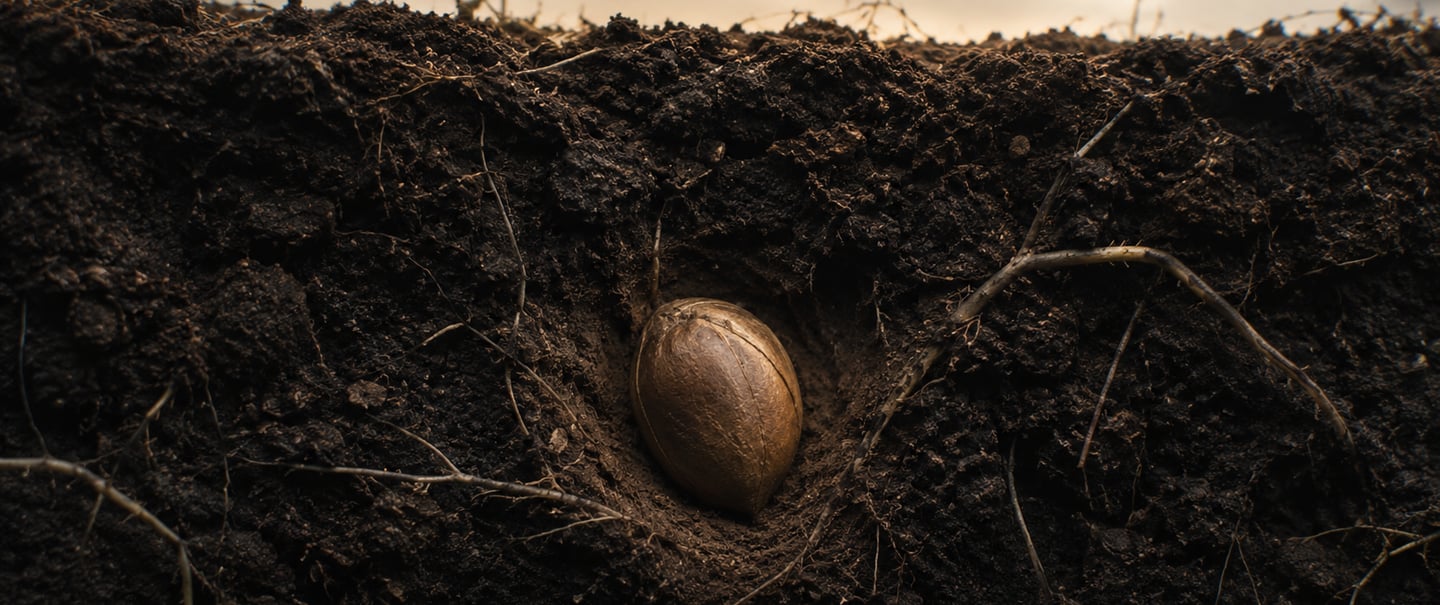
Like a seed enclosed within its outer coat, something alive is being held beneath the surface. The coat helps keep the seed intact during dormancy. It protects what is inside and preserves the possibility of future growth until the surrounding conditions support emergence.
Human forms of protection do not look like a shell.
They may look like functioning, showing up, working, caring, managing, performing, producing, or holding everything together.
They may look like staying busy, staying strong, staying useful, staying quiet, staying in control, or staying out of reach.
They may look like pleasing, withdrawing, anticipating, avoiding, numbing, fixing, overworking, or pushing through.
Much of life may be moving through patterns your system learned in order to keep going.
These patterns may have protected you from feeling too much at once.
They may have helped you meet demands when there was no room to pause.
They may have helped you preserve connection, safety, predictability, belonging, or a sense of control.
They may have allowed you to live through experiences you did not yet have the capacity, support, or safety to process.
For a long time, these ways may have helped you stay intact.
And over time, what once protected life can begin to restrict it. What once helped you continue can begin to cost too much.
The familiar patterns may still run, but they no longer restore you. Relief becomes shorter. Effort becomes heavier. Life begins to narrow around managing, recovering, reacting, avoiding, or holding yourself together.
Autopilot is not simply an individual problem.
It is what can happen when life’s capacity to respond becomes shaped by repeated conditions and familiar forms of protection, until those responses begin carrying more of life than conscious participation does.
The question of this stage is:
What has been carrying my life beneath my awareness?
Break
When the old way no longer holds
Break is the stage where life can no longer continue in quite the same way.
Sometimes the break comes because pain or distress has become too present to keep pushing through.
Sometimes it comes because something has ended, changed, or fallen away, and the life that existed around it can no longer be returned to.
Often, both are happening at once.
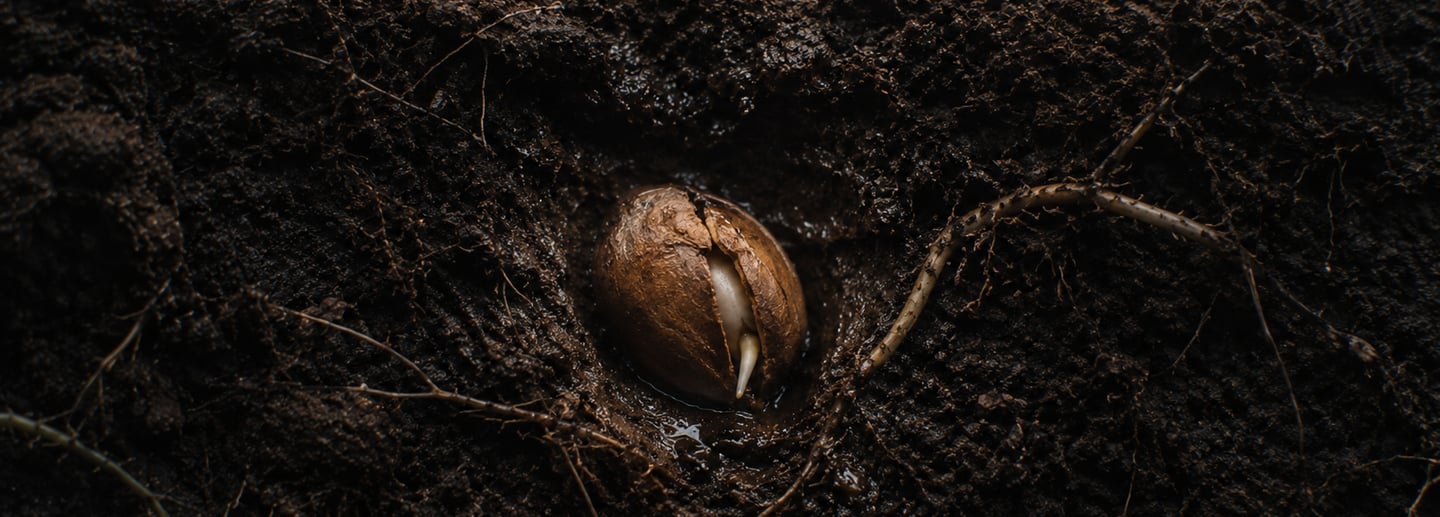
Like a seed taking in water, something begins to change beneath the surface. What was sealed starts to swell. What was held tightly presses against the outer coat. The coat softens, strains, and eventually cracks.
Life has been happening.
Much has been absorbed.
What once protected and contained life can no longer remain unchanged.
For some, the break is felt through pain or distress.
Something hurts, and this time it does not pass through the way it used to. It stays. It gathers weight. It begins to interrupt how you sleep, think, relate, work, decide, or move through the day.
The pain and distress are real.
They may be intense.
The familiar ways of getting through may still offer relief for a moment, but the relief does not last. The weight returns, sometimes heavier than before. What has been pushed through, carried quietly, or held beneath the surface is becoming impossible to ignore.
For others, the break comes through an ending or transition.
A relationship ends.
A role falls away.
A body changes.
A season closes.
A belief no longer holds.
A familiar identity no longer feels true.
The life you knew may be gone, while the life that comes next has not yet taken shape.
This is liminality: the space between what has ended and what has not yet emerged.
You may no longer be who you were, but not yet know who you are becoming. The old direction has disappeared, and no new direction feels clear. What once gave life structure, meaning, belonging, or momentum may no longer be available.
This can feel like emptiness, uncertainty, disorientation, grief, or suspension.
There may be nothing to return to and nothing visible to move toward.
The seed coat has cracked, but the root has not yet found its depth. The shoot has not yet reached the surface. Life is changing, but its next form cannot yet be seen.
Neither kind of break is a failure.
The break of pain reveals what can no longer remain unmet.
The break of liminality reveals what can no longer remain as it was.
Both interrupt the old continuity.
Both can leave you without the protection, certainty, or direction you previously relied on.
And both ask for care before resolution.
A break may include real loss, rupture, or destruction. It should not be romanticized.
But it is not only destruction.
It is also an opening.
What hurts can begin to be met.
What has ended can begin to be grieved.
What no longer fits can begin to be released.
What remains unclear can be given time before it is forced into a new form.
The questions of this stage are:
What is hurting and asking to be met?
What has ended, and what has not yet taken form?
Contact
Where life reorganizes beneath the surface
After the break, something has opened.
But opening is not yet emergence.
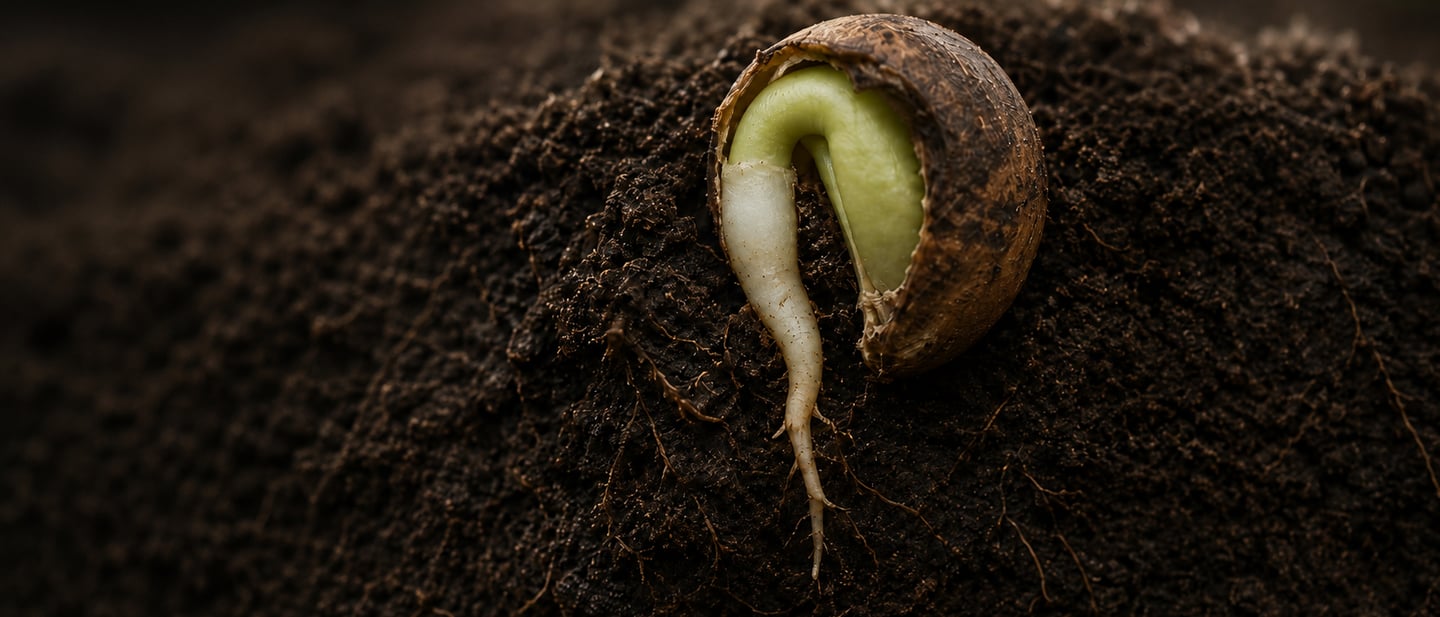
The deeper work of germination takes place beneath the soil.
New structures start to form. The first root prepares to emerge.
Life is reorganizing.
This is Contact.
Contact is the stage where much of the deeper work takes place.
Attention turns toward the whole living system: what it has carried, what has been depleted, what continues to strain it, and what it has learned to do in order to keep going.
Not only toward the pain that became visible at the break but also toward what lies beneath and around it.
The grief that was never fully received.
The experiences that could not be processed at the time.
The exhaustion created by prolonged effort.
The needs that were repeatedly set aside.
The conditions that demanded too much or offered too little.
The protective patterns that became the most available way to cope.
This is where unburdening can begin.
What has accumulated in the body, mind, relationships, roles, and ways of living can be acknowledged and worked with.
Some burdens need to be felt and processed.
Some need to be expressed.
Some need to be grieved.
Some require repair.
Some belong to conditions that need to change.
Some cannot simply be released and need to be carried with more support, truth, and care.
Contact does not assume that everything difficult lives within the person.
The system exists in continuous relationship with its surroundings.
The demands placed upon it matter.
The support available to it matters.
The relationships, environment, resources, expectations, and structures around it matter.
Some of the work happens within.
Some of it happens by changing what surrounds and continues to strain the system.
Contact is also where restoration takes place.
A system that has been under prolonged strain may have less energy, steadiness, flexibility, attention, and capacity for recovery.
Restoration means tending what has been depleted and rebuilding what prolonged strain has made less available.
It may involve rest, nourishment, movement, emotional processing, supportive relationships, medical or therapeutic care, reduced demands, safer conditions, or rhythms that allow effort and recovery to exist together.
Restoration is not separate from the deeper work.
It is one of the conditions that makes the deeper work possible.
This is also where patterns can be worked with.
The pattern may be pleasing, withdrawing, controlling, anticipating, overworking, numbing, fixing, shutting down, reacting quickly, or holding everything alone.
The work is not to attack the pattern or force it to disappear.
It is to understand how it formed, what it has been doing, and what keeps it available.
What does it protect?
What does it help you avoid, preserve, secure, or endure?
What conditions call it forward?
What need is it trying to meet?
What relief does it offer?
What does it cost now?
A pattern may remain even after it has been understood.
Understanding alone does not always make another response available.
Patterns begin to loosen when the system has more capacity, when burdens are met, when constraints are reduced, and when different responses become safe and available enough to practice.
This work may involve the body, emotions, thoughts, memories, relationships, habits, boundaries, and surrounding conditions.
It may involve learning to settle after activation, return gently from shutdown, remain present with difficult experience, ask for support, receive care, make repair, and respond without immediately returning to what is familiar.
Like germination, much of this work happens before anything visible appears above the surface.
A burden may be loosening before life feels lighter.
Capacity may be rebuilding before confidence returns.
A pattern may be becoming less automatic before a different response feels natural.
New structures may be forming before there is any clear sense of direction.
This does not mean nothing is happening.
It means change is taking place beneath the surface.
Contact is where what has been carried is worked with, what has been depleted begins to be restored, what continues to strain the system is addressed, and new capacities begin to develop.
The questions of this stage are:
What has my system been carrying, and what needs to be worked with now?
What needs to be restored, unburdened, supported, or changed so that new life can begin to take root?
Define & Design
Where life takes root and finds direction
New capacities are forming.
Now life begins to establish itself.
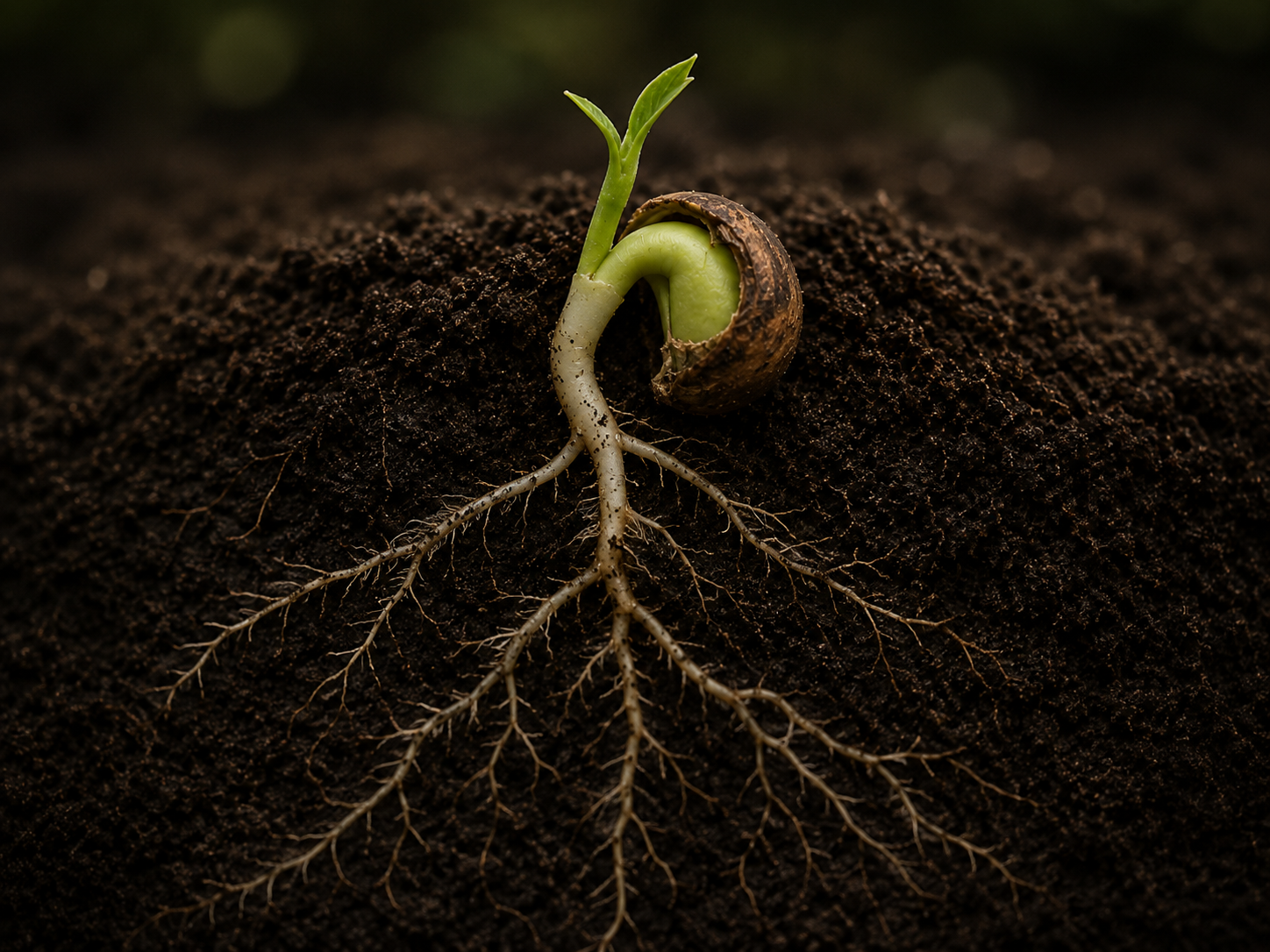
The first root moves into the soil, seeking water, nourishment, and stability. It begins to anchor the emerging shoot.
At the same time, the shoot begins orienting upward, moving toward light before it has reached the surface.
One movement creates grounding.
The other creates direction.
This is Define & Design.
It is the stage where the self begins to participate more consciously in the life taking shape.
Until now, much of life may have been defined by what happened to you, what was expected of you, what others needed from you, what your circumstances allowed, or what your protective patterns made possible.
These influences do not disappear.
They remain part of the ground from which you are growing.
But they no longer have to be the only authors of your life.
Define is the work of self-authoring.
It is the movement from receiving an identity toward participating in its formation.
This does not mean inventing a new self from nothing.
The self has already been shaped by the body, relationships, history, culture, roles, losses, choices, and conditions through which life has unfolded.
Self-authoring begins by seeing that shaping more clearly and asking:
What still feels true?
What was inherited but never consciously chosen?
What was formed for protection rather than expression?
What belongs to a role or season that has ended?
What have I outgrown?
What matters to me now?
The answers may not arrive all at once.
They may begin as a quiet sense of recognition.
A value that continues to return.
A boundary that can no longer be ignored.
A way of living that feels increasingly untrue.
A longing that remains after the noise has settled.
A part of the self that has been present for a long time but has rarely been given room to lead.
Defining does not require a complete or permanent identity.
The self is living. It continues to develop, respond, and change.
What this stage asks for is enough clarity to begin moving from the inside out.
This may involve defining what you value, how you want to relate, what you want to contribute, what you are willing to participate in, and what you no longer want your life to be organised around.
It may involve reclaiming parts of yourself that were set aside.
It may involve releasing identities that once provided belonging, recognition, safety, or purpose but no longer fit.
It may involve allowing some parts of yourself to remain unfinished, contradictory, or unclear.
Self-authorship does not mean having a final answer to who you are.
It means becoming increasingly able to recognise yourself in how you live.
But direction alone is not enough.
A shoot cannot continue reaching for light without roots capable of supporting it.
This is where Design begins.
Design is the work of shaping life so that what matters has a genuine chance of being lived.
It asks not only:
What do I want to move toward?
It also asks:
What conditions would help make that movement possible?
The system has finite energy, attention, flexibility, and capacity.
It cannot sustain every demand.
It cannot remain continuously activated without cost.
It cannot repeatedly move toward what matters if the surrounding conditions keep making the old pattern easier, safer, faster, or more available.
Design therefore works with reality.
It considers the load being carried, the capacity currently available, the constraints that remain, and the support the emerging life requires.
This may mean creating rhythms that include both effort and return.
It may mean building routines that reduce the energy required to do what matters.
It may mean changing an environment that repeatedly pulls you toward an old pattern.
It may mean setting boundaries around demands that consume more than they return.
It may mean choosing relationships in which honesty, belonging, reciprocity, and repair are possible.
It may mean asking for help, sharing responsibility, reducing friction around supportive actions, or creating distance from what repeatedly causes harm.
It may mean organising time, space, work, rest, nourishment, attention, and connection with greater care.
Design is not about constructing a perfect life.
It is not about controlling every outcome or removing all difficulty.
It is not another demand to manage yourself flawlessly.
It is stewardship.
Stewarding the system means caring for the body, mind, relationships, and conditions through which the self must live.
It means recognising that every commitment has a cost.
Every sustained effort draws on something.
Every repeated demand shapes what remains available.
Every environment supports some responses while making others more difficult to reach.
Stewardship asks whether the life being designed can be carried by the system that must live it.
A direction may be meaningful and still be unsustainable in its current form.
A goal may matter and still require more support, more time, fewer competing demands, or a different route.
A choice may be life-giving and still feel difficult because the conditions around it have not yet been shaped to support it.
This is not a failure of commitment.
It is information for the design.
Define and Design belong together.
Definition without design can leave what matters as an intention that life repeatedly crowds out.
Design without definition can create an efficient life that still does not feel like your own.
Self-authorship gives the emerging life direction.
Stewardship gives it conditions in which that direction can take root.
The root does not determine every branch the plant will one day grow.
It establishes contact with what can sustain it.
The shoot does not yet reveal the plant’s full form.
It begins by orienting toward light.
In the same way, you do not need to know the whole life ahead.
You need enough grounding to support what is emerging.
Enough clarity to recognise what matters.
Enough structure to make the next movement possible.
Enough flexibility for the design to change as you do.
This stage is not about finalising a life.
It is about beginning to author and steward one consciously.
The questions of this stage are:
Who am I becoming, and what do I want my life to be organised around?
What rhythms, relationships, boundaries, supports, and conditions will help that life take root?
Engage & Evolve
Where life meets the world and grows through participation
The roots have begun to establish themselves.
The shoot has found its direction.
Now the young plant reaches the surface.
It enters light, air, weather, and changing conditions. Its first leaves open. It begins drawing energy through active exchange with the world around it.
This is Engage & Evolve.
It is the stage where the life you have begun to define and design becomes lived.
Values move into choices.
Intentions move into action.
Boundaries enter relationships.
New rhythms meet real demands.
The emerging self begins participating in work, connection, creativity, responsibility, contribution, pleasure, and the ordinary movements of daily life.
This is where direction becomes practice.
The life shaped beneath the surface now encounters reality.
Some of what you designed will support you.
Some of it will need to change.
A rhythm that seemed sustainable may become too demanding.
A boundary may need to be expressed more clearly.
A relationship may respond differently than you hoped.
A meaningful direction may require more support, time, skill, or courage than you first understood.
An old pattern may return when conditions become difficult.
None of this necessarily means the design has failed.
It means life is providing information.
Engagement reveals what reflection alone cannot.
Through participation, you begin to discover what strengthens you, what depletes you, what feels true in practice, what only sounded right in theory, and what your system can genuinely sustain.
The work is no longer only to ask:
What matters to me?
It is also to notice:
What happens when I try to live it?
Engage means entering life without abandoning yourself.
It means remaining in contact with your body, your capacity, your values, and the conditions that support intentional living while you move toward what matters.
This may involve relating with greater honesty.
It may involve returning to work differently, creating something, learning, contributing, making decisions, taking considered risks, or allowing yourself to be seen.
It may involve resting before exhaustion, asking before resentment grows, speaking before silence becomes disconnection, and pausing before a familiar pattern carries the moment.
It may involve discovering new forms of joy, belonging, competence, expression, or purpose.
Engagement does not mean constant activity.
Rest, reflection, withdrawal, and return remain part of participation.
A plant does not grow through sunlight alone. It continues through exchange, rhythm, nourishment, and recovery.
The system still needs stewardship.
Capacity continues to change.
Load still matters.
Constraints may return or take new forms.
The rhythms, boundaries, relationships, and supports established in Define & Design still need to be tended.
Without that care, engagement can become another form of overextension.
This is also where evolution happens.
Evolving does not mean continually becoming more productive, impressive, or advanced.
It means becoming responsive to what living reveals.
The self changes through participation.
A value may deepen.
A belief may loosen.
A goal may become less important.
A relationship may change what you understand about yourself.
An experience may reveal a capacity you did not know you had.
Something you once wanted may no longer fit the person you are becoming.
Evolution asks for enough flexibility to let new understanding change the way you live.
It means revisiting what you have defined and redesigning what no longer supports life.
The question is not only:
Am I following the plan?
It is also:
Is this way of living still aligned with what I know, value, and can sustainably carry?
This requires feedback.
Feedback from the body.
Feedback from feelings, thoughts, and patterns.
Feedback from consequences.
Feedback from other people.
Feedback from the conditions in which life is being lived.
Not all feedback is accurate or caring.
Some may come from people or systems that resist your growth because your former role served them.
Some may come from fear, habit, or expectations that no longer belong to you.
Engage & Evolve therefore requires discernment.
What is this experience showing me?
What belongs to the discomfort of growth?
What signals genuine harm, depletion, or misalignment?
What needs persistence?
What needs adjustment?
What needs repair?
What needs to end?
Growth does not prevent rupture.
You may react from an old pattern.
You may overextend yourself.
You may lose contact with what matters.
You may misunderstand another person, cause harm, or build something that cannot be sustained.
Conscious living does not mean never losing your way.
It means becoming increasingly able to notice, take responsibility, repair what can be repaired, and return.
Repair is part of evolution.
So is revision.
The young plant does not grow along a perfect line.
It responds to light, moisture, wind, space, damage, and the conditions surrounding it. It strengthens through use and adjusts its growth as the environment changes.
Its roots continue developing even after the shoot has emerged.
In the same way, the deeper work does not end when you begin engaging with life.
You may return to Contact when something new needs to be processed, restored, or unburdened.
You may return to Define & Design when your identity, direction, or conditions need to be reconsidered.
You may return to Break when a season, role, relationship, or way of living can no longer continue as it has.
Returning does not mean moving backward.
It is part of how a living pathway works.
Engage & Evolve is not the execution of a finished self.
It is a living relationship between who you are becoming, the world you are participating in, and what both reveal through contact.
This is where agency becomes participation.
Where intention becomes lived experience.
Where the self-authored life remains responsive without being carried entirely by autopilot.
Where you learn not only to choose a direction, but to remain present enough to change direction when life reveals something truer.
The questions of this stage are:
What happens when I live what I have come to know and value?
What is life showing me to continue, strengthen, repair, release, or evolve?
Flow & Flourish
Where more of life becomes available
The plant is established.
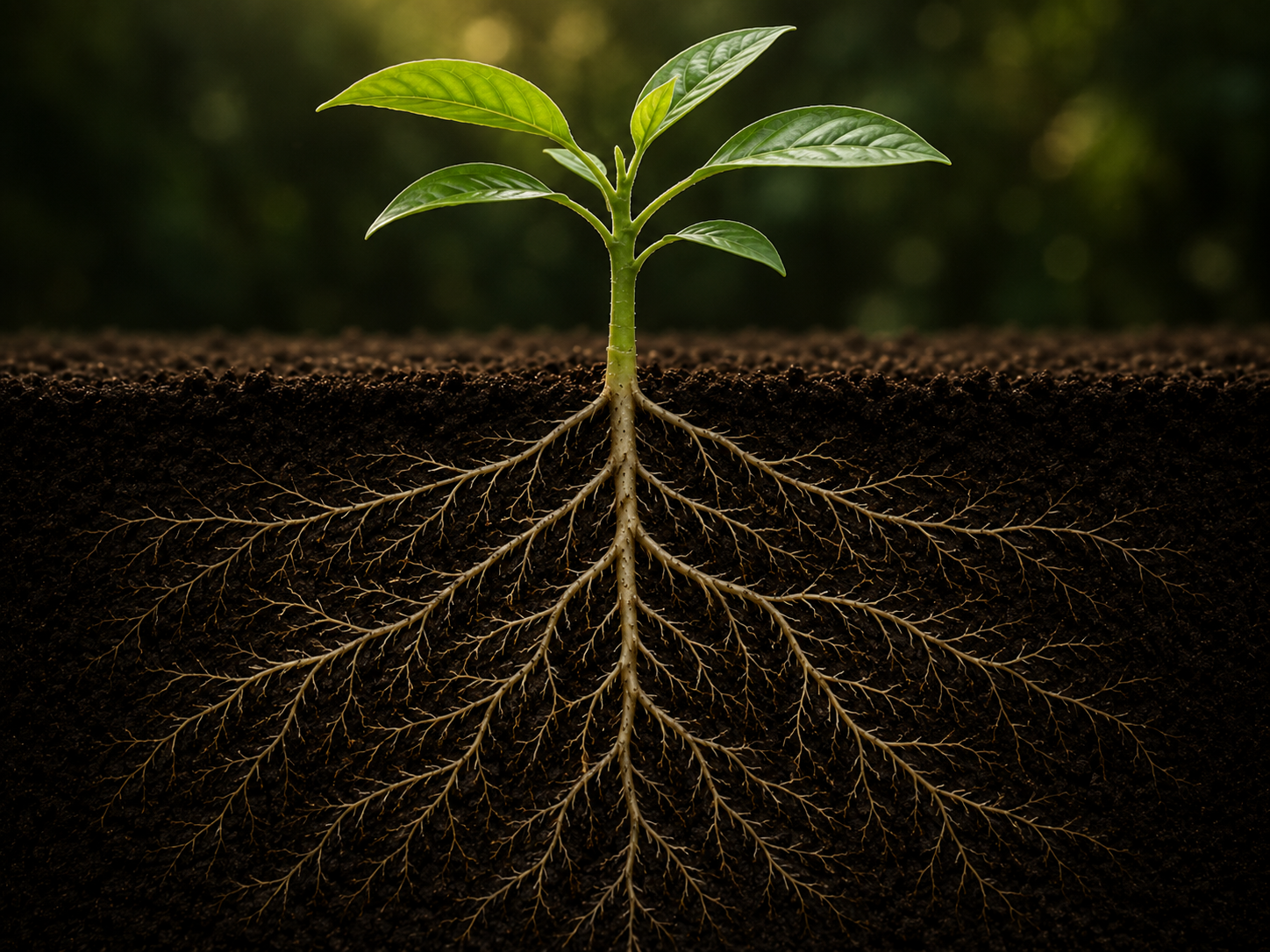
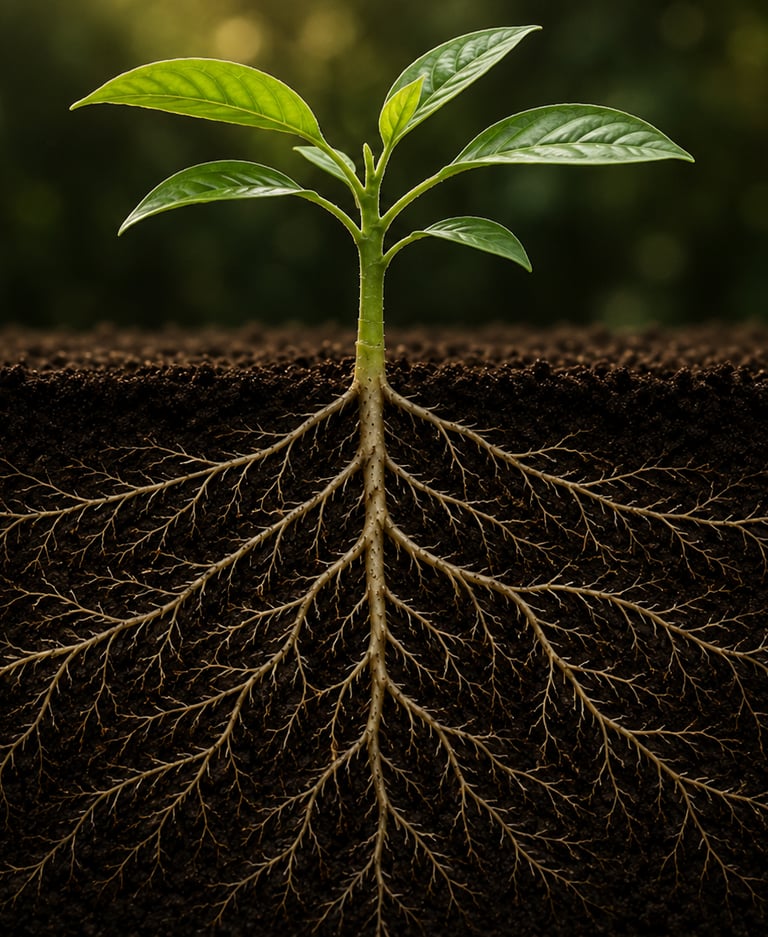
Its roots continue drawing nourishment from the soil. Its leaves receive light. Water and energy move through it. It grows, restores, exchanges, and responds.
The plant begins expressing more of its form.
It branches.
It flowers.
It may bear fruit.
It may offer shade, shelter, nourishment, beauty, pollen, seeds, or soil for other forms of life.
It does not flourish alone.
This is Flow & Flourish.
It is the stage where the different parts of life begin working together with greater coordination.
The self is more available.
The system has more capacity to respond without being carried immediately by familiar patterns.
Values are more present in everyday choices.
Rhythms of effort, rest, engagement, and return are more established.
Relationships, environments, and ways of living are more supportive of the person you are becoming.
Life is not perfectly balanced.
But it is more inhabitable.
Flow
Flow is not the absence of effort.
It is effort moving through a system with enough capacity, support, and coordination to carry it.
There is less friction between what you know and how you live.
Less energy is spent performing a life that does not feel like your own.
Less of the self is lost to constant bracing, managing, suppressing, or recovering.
Attention becomes more available for the present.
Choice becomes more available within response.
Action becomes more aligned with what matters.
You may be able to move between challenge and recovery without remaining trapped in either.
You may act with intention without forcing every movement.
You may notice an old pattern without being fully carried by it.
You may experience difficulty while remaining connected to yourself, to others, and to the wider life around you.
This is not effortless living.
It is more coordinated living.
Flow may appear in work that absorbs and expresses you.
In a conversation where you remain connected to yourself while being genuinely present with another person.
In the ability to create, contribute, play, rest, decide, or move without every action becoming a struggle against the system.
It may appear as a growing trust that you can meet what arises, ask for what you need, and return when life disrupts your rhythm.
Flow does not mean the system is always calm.
A living system moves.
It activates.
It settles.
It reaches.
It protects.
It withdraws.
It restores.
The movement is not the problem.
What matters is that the system is increasingly able to move through these states without becoming permanently organised around one of them.
There is access to activation when action is needed.
Access to rest when effort is complete.
Access to connection without losing the self.
Access to solitude without disappearing.
Access to grief without becoming only grief.
Access to joy without immediately bracing for its loss.
This flexibility is part of flourishing.
Flourishing
Flourishing is not a life without pain, distress, uncertainty, rupture, or loss.
Life will happen.
Bodies change.
Relationships shift.
Conditions become difficult.
Plans fail.
Grief returns.
New seasons begin before the old ones have been fully understood.
Flourishing does not make you untouchable.
It makes more of you available for meeting what touches you.
You may still hurt, but pain does not have to organise the whole life around it.
You may still become distressed, but distress does not have to erase every other truth.
You may still return to an old pattern, but the pattern no longer has to become a permanent home.
You may still break, and you may have more ways to meet the break, receive support, repair what has been affected, and return.
Flourishing is not an achievement awarded for completing the work.
It is the increasing availability of life.
Energy once consumed by constant protection may become available for curiosity.
Attention held by threat may become available for presence.
Capacity spent on holding everything together may become available for creativity, pleasure, learning, contribution, and connection.
A self organised mainly around survival may become increasingly able to participate in life from meaning, integrity, and care.
This may feel expansive.
It may also feel ordinary.
Flourishing may be the ability to enjoy something without rushing past it.
To receive care without immediately trying to repay it.
To feel enough without having produced anything.
To rest without interpreting rest as failure.
To belong without performing for belonging.
To speak honestly without abandoning either yourself or the relationship.
To contribute without emptying yourself.
To experience pleasure, play, beauty, affection, wonder, or delight and allow the moment to register.
A flourishing life does not have to appear impressive from the outside.
It has to be increasingly livable from within.
Contribution and exchange
This is also where contribution becomes more visible.
A mature plant does not keep everything it receives.
It participates in exchange.
It draws from soil, light, water, air, and the wider ecology.
It also gives.
Its flowers support pollinators.
Its fruit nourishes other life.
Its roots help hold the soil.
Its fallen leaves return material to the ground.
Its seeds carry possibility beyond itself.
Human flourishing is relational too.
What becomes available within you can begin to enter the world around you.
Your presence may help another person feel less alone.
Your boundaries may interrupt a pattern of harm.
Your repair may restore trust.
Your work may serve, create, protect, or contribute.
Your care may help build conditions in which another person can breathe, develop, or belong.
Your choices leave a trace.
Flourishing therefore includes responsibility.
Not the responsibility to save everyone, carry everything, or make yourself endlessly useful.
The responsibility to recognise that your life affects other life.
To notice what your way of living creates around you.
To receive what supports you without assuming it exists only for your use.
To contribute where contribution is yours to make.
To reduce avoidable harm.
To participate in relationships and systems that make more life possible.
This is part of living fully together.
Flourishing is never only personal
No plant flourishes through its own effort alone.
Soil, water, light, climate, other organisms, and time all participate in what becomes possible.
Human beings also flourish through conditions.
Through safety, support, resources, belonging, meaningful participation, care, opportunity, and environments that do not continually overwhelm or diminish them.
Flourishing cannot therefore be reduced to mindset, discipline, or personal achievement.
Some people are living within conditions that make flourishing far more difficult.
Some are using most of their capacity simply to remain safe, housed, fed, connected, or functioning.
The pathway does not turn those conditions into an individual failure.
It invites us to care for the person and to keep asking what must change around them.
Flow & Flourish therefore includes stewardship beyond the individual self.
It may involve helping create relationships, communities, workplaces, and systems in which more people have the conditions to participate fully.
It may mean sharing resources, changing harmful practices, making room for different bodies and ways of being, or questioning arrangements that require some people to remain depleted so others can thrive.
More life is not more life for one person at the expense of another.
Flourishing asks what can be sustained, shared, and made more widely possible.
Flourishing remains seasonal
A plant does not flower continuously.
It grows, flowers, fruits, sheds, rests, and begins again.
Some seasons are expansive.
Others are quiet.
Some ask for contribution.
Others ask for conservation, repair, or withdrawal.
A season of reduced output is not necessarily a loss of flourishing.
Rest can belong to flourishing.
Grief can belong to flourishing.
Dependence can belong to flourishing.
Not knowing can belong to flourishing.
The measure is not whether life remains permanently open, productive, or joyful.
It is whether the different seasons can be met without one season becoming a verdict on the whole life.
Flow includes losing rhythm and finding it again.
Flourishing includes allowing a season to end.
The pathway remains available
A new rupture may bring you back to Break.
Something newly revealed may return you to Contact.
A changing identity may call for Define & Design again.
A new environment may require another period of engaging, learning, and evolving.
Returning is not evidence that flourishing has been lost.
It is part of flourishing.
A mature living system does not remain unchanged.
It continues responding, adapting, receiving, contributing, repairing, and becoming.
Flow & Flourish is not the end of the journey.
It is a fuller way of participating in its ongoing movement.
The roots remain connected to the ground.
The branches continue responding to weather.
The plant receives what supports it.
It gives what becomes available to give.
It flowers when the season allows.
It rests when the season requires.
It carries new seeds, each holding another possibility for life.
The questions of this stage are:
What becomes possible when more of my life is available for living, relating, creating, and contributing?
How can I receive, express, share, and sustain that life without abandoning the system or the world that makes it possible?
Begin where you are
You do not need to move through this journey in order. Begin with what is most present, what is asking for care, and the support that feels possible now.
Reach Out:
© 2026. Milu Tilleli Limited
All rights reserved.


Connect:




Important Note
This work is educational and non-clinical. It draws on lived experience, research, and reflective practice and is grounded in recovery-oriented, trauma-informed, and whole-person approaches.
Its purpose is to support well-being, personal growth, human flourishing, and the collective good through learning, reflection, and practical tools. It honors personal agency and the many biological, psychological, social, spiritual, and environmental conditions that shape human life.
This work does not diagnose, treat, cure, or prevent any medical or mental health condition. It is not a substitute for medical treatment, mental health care, crisis support, or other professional care when needed.
You are invited to engage at your own pace, in ways that respect your capacity, context, needs, and goals.
If you are experiencing significant distress or ongoing mental health challenges or feel you may benefit from clinical care, seeking support from a qualified healthcare or mental health professional is encouraged.
contact@livingfullytogether.com